


Welcome to the Classic Channel Regatta – a uniquely enjoyable week-long international event with its own distinctive and varied blend of racing with a lively and informal social programme bringing together a wonderful gathering of classic boats and their crews from Britain, France and further afield.
The regatta is biennial and the next one in 2024 will again start in Dartmouth with two days of racing in Start Bay before racing to St Peter Port in Guernsey and then on to Paimpol in Brittany where there will be the legendary welcome and hospitality in Paimpol and a race around the Île de Brêhat.
The regatta is centred on three of the finest historic ports in the English Channel, each providing a beautiful backdrop with its own distinctive Westcountry, Channel Islands and Breton ambiance. And while the racing is the backbone of the regatta, it is the crews and beautiful boats, and the informal socials ashore, that are its beating heart.
Racing is under the JCH Classic Handicap which is free and easy to obtain online. Classic yachts designed before the end of 1974 built in any material, and some more recent yachts designed and built in classic style, are eligible.
The Classic Channel Regatta is a revival of the spirit of an earlier age of sailing and racing. If you own or sail in a classic yacht, or just want to come and admire the spectacle, we hope you’ll be able to join us at the 2024 regatta to experience everything that makes the Classic Channel Regatta “the world’s most beautiful regatta”.
Racing
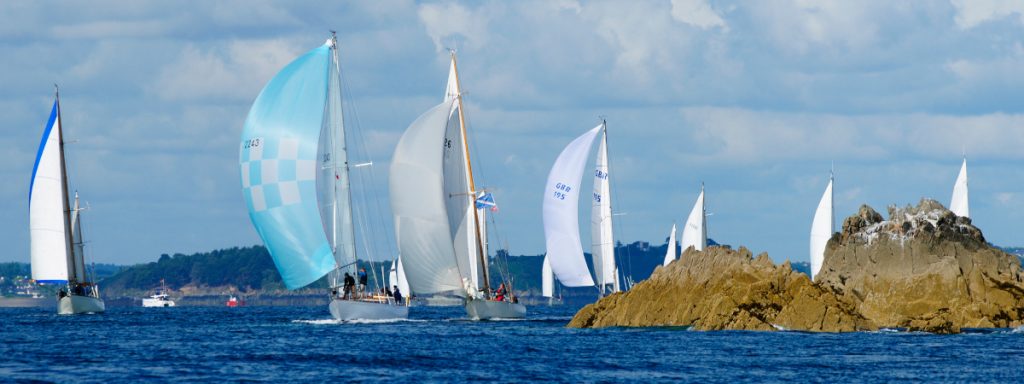
We describe the racing as ‘gentleman’s racing’ and you can be as competitive or relaxed as you like. The rating system used is the JCH Classic Handicap which is free. Most yachts designed before the end of 1968, approved designs from 1969 to the end of 1974, and later designs in classic style are eligible to take part.
Most yachts do the whole Classic Channel Regatta, but there are options to do just sectors if time is limited. The general format for racing is two days of racing off Dartmouth, followed by an overnight race Cross Channel to a Channel Island. After a rest day in the Channel Islands there is a race to Paimpol. The racing concludes with a day race round the Île de Bréhat.
Social Programme
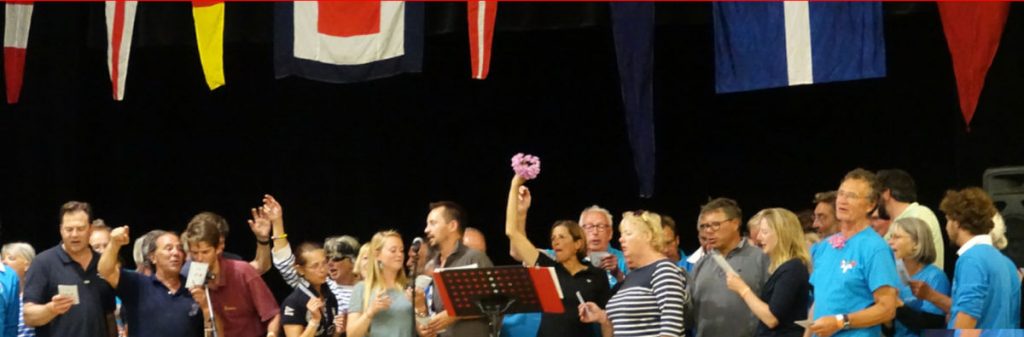
While the racing is the backbone of the regatta, the social side is its beating heart and we take the parties and socials as seriously as the racing!
In Dartmouth the regatta is hosted by the Royal Dart Yacht Club (which is in fact across the river in Kingswear) where we hold a Welcome Reception followed by a crew supper, and the prizegiving for the Dartmouth Classics Races which is followed by a bbq.
The high point of the social programme in Dartmouth is the regatta’s Crew Supper-Party in the historic Old Market Square where we can seat up to 400 crews for dinner with music by a jazz band.
Plans for the stopover in St Peter Port are still developing, but so far we plan to keep it fairly low key with an evening rendezvous in the Guernsey Yacht Club. But there may be more – so watch this space!
The welcome and hospitality the regatta receives in Paimpol has become quite legendary. After a parade up the approach channel, the fleet is welcomed into the lock by pipers and cheering locals. Once berthed, drinks on the quayside kick things off, then there are all the cafés and restaurants around the harbour to eat and drink in. A picnic lunch is provided for the Île de Bréhat Race and the ‘Danse des Classiques’ after the race is a great fun event before returning to Paimpol for the night.
Another highly enjoyable fun event is the blindfold dinghy racing in the harbour – offshore racing rules certainly do not apply!
The regatta ends with a prizegiving on the quay followed by the finale crew supper-party in the town’s Salle des Fêtes.
Spectators
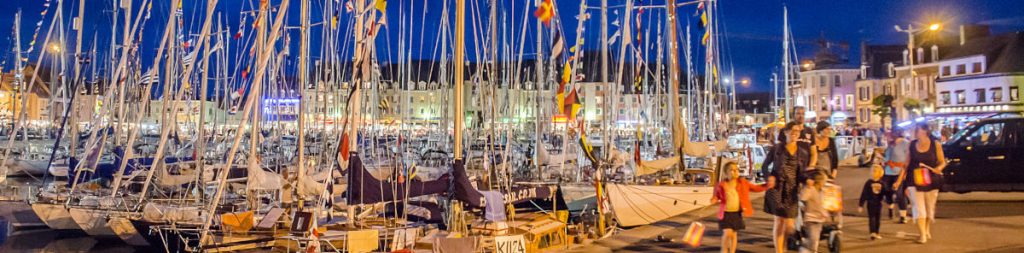
There are numerous activities on the water and ashore of interest to spectators and crew-members. Classic
boats in these sorts of numbers are a spectacular and beautiful sight.
- A Parade of Sail in Dartmouth Harbour and the boats moored in port.
- The racing in Start Bay can be seen from the shore south of Dartmouth.
- Entry into the lock at Paimpol after the Channel Race, with music on the harbour wall.
- The popular “Danse des Classiques” is ideal for spectators – spectator boats “Vedette de Bréhat” sailing from Paimpol
- Parade of Sail into Paimpol Harbour after the Danse des Classiques and the boats moored in port.
- The regatta village in Paimpol with stalls and entertainment and the harbour celebrations.
- Sightseeing trips and sports events for the crews in and around Paimpol.
Trophies
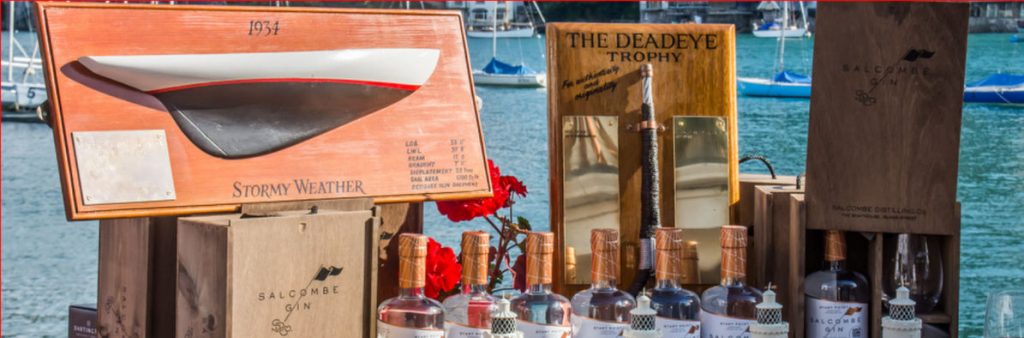
As well as the prizes awarded for the racing, we also award the Spirit of the Regatta Trophy, The Doug Briscoe Trophy (half model of Stormy Weather) in the spirit of long distance sailing and the Dead Eye Trophy for the best restored yacht at the regatta. There are also prizes for the Danse des Classiques, The Kim Holman Salver for the best performance by one of his designs and the Twister Class Trophy.
The prizes for racing at Dartmouth Classics are sponsored by Salcombe Gin.
The prizes for the overall regatta race results are sponsored by Dubarry of Ireland..
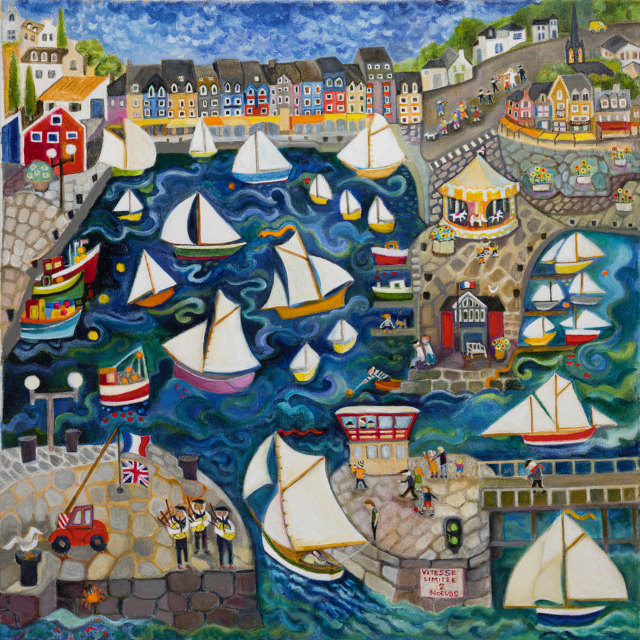
For each Regatta since 2011 we have commissioned an original painting to represent the Spirit of the Regatta. It features in our publicity for the Regatta and the framed original or fine art print is presented as the ‘Spirit of the Regatta Trophy’ at the end of the Regatta to the boat and crew that has best represented the Corinthian ethos of the Regatta.
The 2024 Spirit of the Regatta painting is une peinture naïve Paimpolaise – evoking the joy of the port of Paimpol ‘en régate’ for the Classic Channel Regatta. The Trophy is an original painting by Vivien Thorogood.
Charity: Classic Young Sailors Foundation
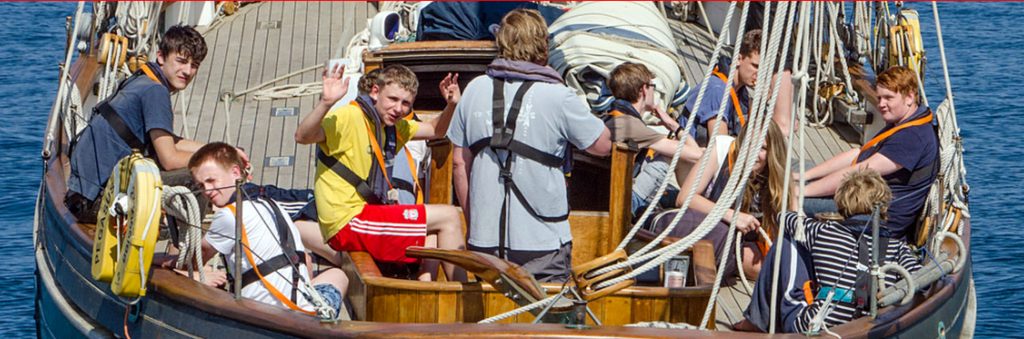
In 2018 we set up the Classic Young Sailors Foundation as a UK registered charity with the aim of encouraging and supporting young people who would not otherwise have the opportunity to sail in our classic and traditional boats.
We believe these boats deliver an especially beneficial seagoing experience, and we want to inspire in the next generation a love of sailing them, along with an understanding of the heritage that they represent.